5. Leadership and Vision
January 21, 2009 Leave a comment
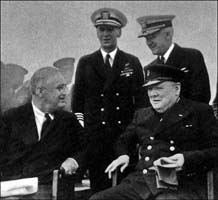 Vision is the fifth attribute common to superior leaders. Usually, the word “vision” in leadership brings to mind lofty, high level ideals – a long term strategic objective. But leaders with vision do more than align staff members with a company’s mission or rally the public around a common cause.
In a broader sense, visionary leaders focus on everyday objectives, not obstacles. They are optimistic and enthusiastic and inspire people. People naturally follow leaders who arouse their hopes just as surely as they reject anyone who is perpetually pessimistic. Have you ever known an effective leader who was lazy or constantly negative?
That’s not to say that visionary leaders are Pollyannas. Leaders cannot simply pretend that setbacks don’t occur or that challenges don’t exist. The reality of a given situation may very well present real and significant problems to be addressed. They have to be honest and forthright to stay credible. But rather than allowing the focus of the group to become fixed on the difficulties, they engage the team in developing productive and meaningful solutions.
Visionary leaders are passionate and purposeful about the work that they do and the objectives they seek. Indifference is contagious and erodes the credibility and effectiveness of a manager, so leaders demonstrating strength of vision must have the courage to challenge those around them, subordinates and superiors. In this context, “challenge” means that visionary leaders question the validity of assumptions or reasoning of others, not to be obnoxious, but to better understand and facilitate meaningful two way communication and feedback. It’s a fine line to be sure, but if leaders are afraid to speak up, the flow of communication becomes so filtered that it is rendered meaningless, or worse, actually opposite of what was originally intended.
There’s a great book by George Washington University Professor, Jerry Harvey, called “The Abilene Paradox.” In it, Harvey illustrates the paradox in which a group of people collectively decide on a course of action that is actually counter to the preferences of each individual in the group, simply because no one wants to speak up and be the squeaky dissenting wheel. So, a family takes a 53 mile trip to Abilene, Texas for dinner on a hot Sunday afternoon because each of them believes the others all want to go. In reality, none of them want to make the trip but they all go along, wasting a Sunday afternoon collectively doing something that none of them wanted to do, because no one had the courage to challenge the assumption.
Just as visionary leaders must be willing to challenge those around them, so must they be willing to be challenged. Too often we solicit the opinion of others thinking we want information, when we really just want confirmation. That kind of confirmation feels good, but it doesn’t mean very much. It’s like telling the Emperor that his new suit looks fantastic instead of pointing out that he’s walking around naked (Please tell me someone remembers that Hans Christian Anderson fable). And guess what happens when the information we receive doesn’t quite align with the confirmation we were looking for? That’s right. The Emperor is not happy… until he finally realizes that someone had the courage to be honest with him and act in his best interest.
I think it’s natural to prefer a response that validates rather than contradicts, but there is tremendous value in constructive feedback. Visionary leaders check their ego at the door, slice themselves a big piece of humble pie, and rely on others who they trust to be honest and provide intelligent insight. Their purpose is to make everyone around them better, but they also reap what they sow. Engaging others in an objective focused process makes them stronger, more effective, and more motivated. And that’s the whole idea.
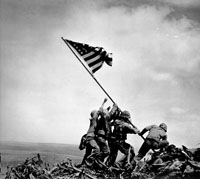 Winston Churchill said, “Courage is what it takes to stand up and speak; courage is also what it takes to sit down and listen.” This quote from one of the 20th century’s greatest leaders holds a wealth of wisdom in its simplicity. No one would argue that it often requires courage to take action. It’s easy in times of conflict to sit back and let others do the dirty work. But it also takes courage at times to not act immediately, especially when confronted with adversity. Knowing when to intervene and when to let events run their course comes with experience and confidence. Courageous leaders calmly assess the situation and explore alternatives, even as others respond emotionally, demanding swift action. This measured response to adversity requires discipline and the courage to be steadfast.
 The third attribute demonstrated by superior leaders is often the most elusive and under-appreciated. The very concept of humility rarely crosses the mind of most people in positions of authority. It is simply not how we are typically conditioned to think. Our culture champions the loud, the bold, and the brazen. I stated early on that we live in a self-centric society. It’s the “me” generation – self-absorbed, self-centered, self-inflated, narcissistic, entitled, demanding instant gratification, and lacking any sense of personal responsibility. This is the age of entitlement. At the risk of sounding like somebody’s grandfather, today’s generation is vapid and superficial, placing more value on appearance than character.
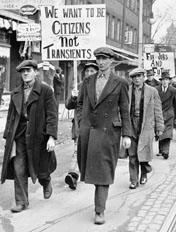 As I wrote in my last post, personal discipline, as it contributes to strength of character, ensures we are guided by principle rather than emotion or personal desire. In that context, self-discipline, resilience, and integrity all go hand in hand. But in a much broader sense, the discipline that strong leaders demonstrate reflects much more than mere self-control.
 Strength of character, as the blog title implies, is one of the most important attributes of a leader. As I stated earlier, effective leaders must have credibility, the trust and confidence of others. Key to this is a strong sense of integrity. Integrity is built on honesty and the consistent, steadfast adherence to established principles and standards. Strong leadership is dependent upon character, and character is certainly measured, if not defined, by integrity.
 The Character of Leadership
Recent Comments