The Character of Leadership Competency Model
October 13, 2013 Leave a comment

The Character of Leadership Competency Model – © Bryant Rice, 2013
The Character of Leadership Competency Model was developed through years of personal experience. It was influenced by the thoughts and ideas from a multitude of sources, and shaped by real world application in my role as a leader, influencer, and developer of people. I believe that the foundation of superior leadership is comprised of 5 essential core attributes – Character, Discipline, Humility, Courage, and Vision.
Naturally, there are also many essential behaviors that leaders must demonstrate. Good communication is most often noted as an obvious example. I certainly agree, however, this model is not intended to be a list of behaviors or habits. It’s far more a reflection of the values and belief system that superior leaders model in their both their personal and professional lives. These attributes represent the broadest measure of a leader’s effectiveness and success.
Character
- Trustworthy – Trust is a product of character and integrity, and is the foundation for effective leadership.
- Speaks with Authority – Leaders speak not out of arrogance (from a perspective of position or title, i.e., ego), but with unwavering conviction and confidence in their vision (truth).
- Integrity Above Reproach – Effective leaders must have credibility. This is built on honesty, steadfast principles and standards. Good leadership is a matter of character, and character is defined by integrity.
- Resilient – While having many weaknesses and limitations, leaders must be strong and stalwart.
- Empathetic – Essential to compassion, sensitivity, and understanding – leaders must give people room to fail as well as succeed. People need encouragement and reinforcement when they struggle. That’s why we coach.
Discipline
- Never Compromises Absolutes – It is one thing to compromise on matters of preference, it is quite another to compromise on matters of principle.
- Judgment – The application of wisdom. “Knowledge speaks, wisdom listens” (Jimi Hendrix)
- Definite and Decisive – Good leaders must be able to make decisions that are clear-headed, informed, and conclusive. The must also communicate objectives in a way that is articulate and specific.
- Knows How to Delegate – You simply cannot, and should not, do everything yourself. A few things demand hands-on attention – delegate the rest. Remember what it is you are working for.
- Self-Disciplined – Discipline ensures we operate by principle rather than emotion or personal desire.
Humility
- Humble – Good leaders are humble with a willingness to serve others first – employees, customers, and company. Competent leaders do not need to seek the spotlight of recognition. Their success is defined not by being indispensable to the organization, but by leading others to lead themselves. The most effective leader is one who makes his own presence unnecessary.
- Knows His Limitations – A leader who forgets his own weaknesses will inevitably fail.
- Knows When to Change His Mind – Good leaders are definite and decisive, but not inflexible. They do not perpetuate bad decisions (out of ego) and know when to adapt to changing circumstances.
- Admits Mistakes – Character and trust is strengthened when leaders admit and take ownership of mistakes.
- Does Not Abuse Authority – Having authority does not mean being authoritative.
Courage
- Takes Initiative – Acting in the best interest of others, regardless of position or authority.
- Doesn’t Run in Face of Opposition – Good leaders do not abdicate their role when challenged. They are steadfast and firm – demonstrating authority and grace under pressure.
- Courageous – People do not follow cowards. Character is tested under fire and leaders must demonstrate courage.
- Sets a Personal Example – Empowers others through personal actions and integrity – walking the talk.
Vision
- Strengthens Others – A leader’s purpose is to make everyone around him better – stronger, more effective, more motivated.
- Optimistic and Enthusiastic – Optimistic enthusiasm inspires people. Employees will naturally follow a leader who arouses their hopes, and they will just as surely reject anyone who is perpetually pessimistic.
- Focuses on Objectives – A leader focuses on objectives, not obstacles.
- Cultivates Loyalty – Through trust, integrity, respect, and selflessness
- Passionate – A strong leader cannot be detached or indifferent. He must be passionate and purposeful.
- Energetic – Have you ever known an effective leader who was lazy? Leaders must be industrious and enthusiastic.
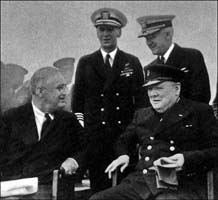 Vision is the fifth attribute common to superior leaders. Usually, the word “vision” in leadership brings to mind lofty, high level ideals – a long term strategic objective. But leaders with vision do more than align staff members with a company’s mission or rally the public around a common cause.
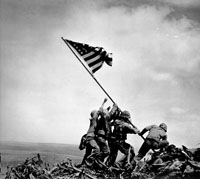 Winston Churchill said, “Courage is what it takes to stand up and speak; courage is also what it takes to sit down and listen.” This quote from one of the 20th century’s greatest leaders holds a wealth of wisdom in its simplicity. No one would argue that it often requires courage to take action. It’s easy in times of conflict to sit back and let others do the dirty work. But it also takes courage at times to not act immediately, especially when confronted with adversity. Knowing when to intervene and when to let events run their course comes with experience and confidence. Courageous leaders calmly assess the situation and explore alternatives, even as others respond emotionally, demanding swift action. This measured response to adversity requires discipline and the courage to be steadfast.
 The third attribute demonstrated by superior leaders is often the most elusive and under-appreciated. The very concept of humility rarely crosses the mind of most people in positions of authority. It is simply not how we are typically conditioned to think. Our culture champions the loud, the bold, and the brazen. I stated early on that we live in a self-centric society. It’s the “me” generation – self-absorbed, self-centered, self-inflated, narcissistic, entitled, demanding instant gratification, and lacking any sense of personal responsibility. This is the age of entitlement. At the risk of sounding like somebody’s grandfather, today’s generation is vapid and superficial, placing more value on appearance than character.
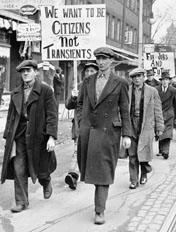 As I wrote in my last post, personal discipline, as it contributes to strength of character, ensures we are guided by principle rather than emotion or personal desire. In that context, self-discipline, resilience, and integrity all go hand in hand. But in a much broader sense, the discipline that strong leaders demonstrate reflects much more than mere self-control.
 Strength of character, as the blog title implies, is one of the most important attributes of a leader. As I stated earlier, effective leaders must have credibility, the trust and confidence of others. Key to this is a strong sense of integrity. Integrity is built on honesty and the consistent, steadfast adherence to established principles and standards. Strong leadership is dependent upon character, and character is certainly measured, if not defined, by integrity.
 The Character of Leadership
Recent Comments